15-25%fuel cut
Typical first-90-day savings on single-depot pilots
Route Optimization
AI plans daily routes that cut fuel costs 15-25% and fit more pickups per shift.
Route optimization and dispatch management built for waste haulers and recycling operators — backed by the same routing stack we use for permit and field operations.
Typical first-90-day savings on single-depot pilots
AI plans daily routes that cut fuel costs 15-25% and fit more pickups per shift.
Real-time GPS on every dumpster — know where everything is, always.
Automated scheduling that balances driver workload, service windows, and route efficiency.
Forecast service demand by zone and customer type to optimize fleet positioning.
Invoicing tied to actual delivery data — no manual entry, no disputes.
Waste logistics software, waste route optimization, container tracking, and dispatch optimization.
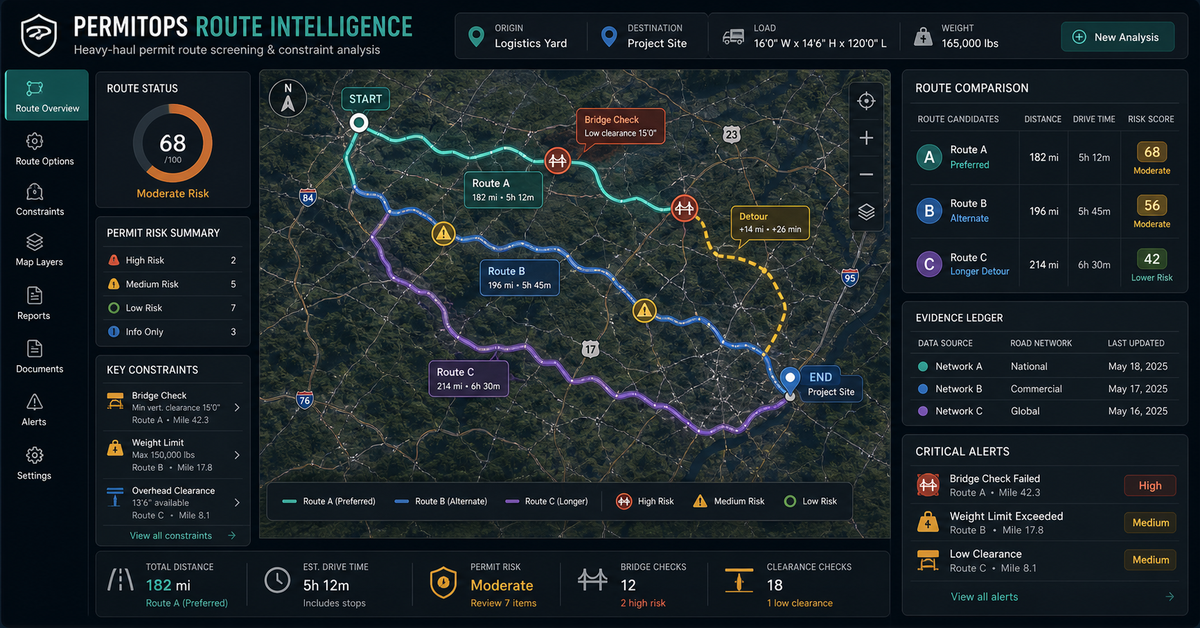
Compare current routes with optimized sequences, mileage, time windows, and constraints.
Track container location, status, service events, and utilization patterns.
Missed pickups, blocked access, call-backs, and driver confirmations stay visible.
Bring the closest real workflow. We map what you send, what your team reviews, what evidence stays visible, and what you receive at handoff.
One depot, stop list, container data, driver constraints, service windows, and missed-pickup pain points.
We compare routes, container status, exceptions, and dispatch handoff requirements.
Route alternatives show constraints, service notes, exceptions, and what needs dispatcher review.
Depot pilot plan, optimized route surface, driver confirmation flow, and savings review.
Operational gains should be measured in one depot before broader rollout.
Optimization must respect service windows, driver reality, and local constraints.
Depot routes, customer stops, container records, driver events, billing exports, and service windows.
Route feasibility checks, exception review, and dispatcher validation.
Pilot dashboard, route plan, exception queue, CSV export, and implementation scope.
No vague discovery phase. You bring four or five things, we return a specific plan you can evaluate.
No open-ended retainers. No "discovery phases" that bill for months without producing anything you can evaluate.
We instrument one depot — current routes, container locations, customer service windows — and benchmark fuel and labor against current ops.
Cellular GPS on every container or driver-app tap-to-confirm at pickup. We size the right approach for your fleet and operating model.
Optimized routes run alongside your current dispatch for 2 weeks. Dispatchers see both, drivers run current, we measure the delta.
Full cutover with 30-day support. We monitor the dashboards, you run the operation. Switch to retainer or self-serve at the end.
These open the real, interactive demos on our main site — not screenshots, not videos. Click around before you decide to talk to us.
Free during beta. Built for waste haulers who want to stop guessing and start optimizing.
No credit card. We reply within one business day.
We focus on the route optimization and container tracking layer specifically, not full ERP. We integrate with Routeware, Soft-Pak, Trux, and major billing platforms — we don't replace them.
Best fit is 5-50 trucks per depot. Below 5 trucks, manual dispatch is often fine. Above 50, you need fleet-wide optimization which is a different engagement (we do those too).
Most operators see measurable fuel reduction by week 4 of full deployment. The 15-25% target is typical at 90-day mark. We instrument before/after metrics during pilot so you can validate independently.
Driver flexibility is baked in — drivers can deviate when conditions warrant, system learns from the deviations. The optimization is decision support, not enforcement. Driver trust comes from accuracy, not policy.
Dispatch optimization, container tracking, and demand prediction built for roll-off dumpster companies — runni…
We turn inspections, asset inventories, environmental sampling, construction checks, and field surveys into mo…
Anchored in the NAIPAI pattern: ask aerial, drone, or satellite imagery useful questions, keep confidence and …
We automate spatial workflows for municipalities, utilities, and infrastructure teams — asset inventory, surve…
Single-depot pilot: instrument your routes, run optimization in shadow mode for 2 weeks, switch over, measure for 6 weeks. Fixed pilot fee, usage-based pricing if you continue.
Pilot one depot